In the modern mental health landscape, few treatments have sparked as much hope, scientific curiosity, and honest reflection as ketamine therapy. At Empathy Grove in Portland, Oregon, this mental health modality has changed how we approach conditions like depression, anxiety, OCD, and especially treatment-resistant forms of these illnesses. The promise of ketamine therapy is substantial: rapid symptom relief, often within hours, for people who have found little benefit from traditional antidepressants or talk therapy alone.
Yet, it’s crucial to talk openly about ketamine therapy’s clinical realities: the experience of difficult, sometimes overwhelming emotions during and after ketamine treatment. Sadness, grief, shame, and even existential fear can bubble up, challenging not only our sense of self but occasionally our commitment to healing itself.
Why is this? How can we approach these moments effectively and safely? And how might harnessing these emotional experiences be central to unlocking the true healing potential of ketamine and related therapies?
The Science and Promise Behind Ketamine Therapy
Ketamine was first developed as an anesthetic in the 1960s, but its rapid, sometimes even immediate, antidepressant effects have only truly been explored over the past two decades. Unlike SSRIs (like Prozac or Zoloft), which take weeks to work and sometimes fail to relieve symptoms at all, ketamine acts quickly, often providing meaningful relief for mood disorders in under 24 hours.
This isn’t just a minor pharmaceutical story. Imagine living with depression so profound that hope itself feels out of reach, and then, within days or even hours of treatment, experiencing a lightening of those burdens. This is the reality for a significant subset of patients undergoing this therapy.
Ketamine’s primary action is as an NMDA receptor antagonist in the brain, leading to a cascade of effects including:
- Increased neuroplasticity (the brain’s ability to rewire pathways)
- Boosts in glutamate signaling
- Rapid formation of new synaptic connections
This “neuroplasticity window” after treatment is believed to be a critical moment for psychological change, when the brain is more open, adaptable, and potentially ready to reprocess long-held patterns of thought or emotion.
The Role of Difficult Emotions in Ketamine Therapy
While reports of rapid improvement are encouraging, it’s equally common, and entirely normal, for patients to experience intense or hard feelings during sessions. These feelings might include:
- Fear of death or ego dissolution (sometimes described as a “little death”)
- Self-judgment and deep-seated shame
- Waves of unresolved grief and sadness
- Intrusive or distressing imagery or sensations
Research has found that such experiences are far from rare; in fact, for many, they are an integral part of the healing journey.

Why Do These Emotions Surface?
Ketamine can soften our usual defenses and mental filters, allowing feelings or memories that have been buried or too painful to face in everyday life to come into awareness. While this can feel intense at times, these experiences are often held differently than they would be outside the session. Many people notice a kind of internal buffer, a sense of space between themselves and what is arising, along with a nervous system that is less reactive and gripped by alarm.
Even when fear, grief, or long-held shame emerges, it is often encountered with more capacity to stay present, rather than becoming fully overwhelmed. These moments aren’t signs of failure; they signal that something important is coming forward. When supported and integrated, meeting these experiences can open the door to meaningful healing and change.
Exploring Common Hard Feelings in Treatment
Let’s look more closely at these challenging emotional experiences, how they manifest, and how best to respond:
1. Fear of Death or Ego Dissolution
Patients sometimes describe a moment when their sense of self feels like it’s dissolving. This might include physical sensations of floating, a fading of identity, or an existential “void.” While terrifying in the moment, many later describe these as moments of profound insight, which foster a deeper appreciation for life, a sense of spiritual connection, or a softened fear of mortality.
2. Self-Judgment, Criticism, and Shame
Deeply ingrained patterns of self-criticism frequently surface. Scenes from childhood, adolescence, or recent failures may replay with fresh emotional intensity. The difference during ketamine sessions? The brain’s new plasticity allows for reinterpretation, meaning you may see these memories for what they truly are (past wounds), not what your inner critic insists they mean about your worth or future. Therapists note this is a crucial opportunity to challenge automatic, shame-driven narratives and create new self-compassionate pathways.
3. Unresolved Grief and Loss
Ketamine can open the emotional “vault,” bringing forth feelings of unresolved grief, lost loved ones, relationships, or even abandoned hopes. While painful, this can allow for an emotional “naming” and integration of grief, transforming it from a “ghost” in the psyche to a part of lived, processed experience.
In fact, a 2021 study found that grief can become a catalyst for personal growth when approached in a safe, supported therapeutic context.
Harnessing the Healing Window: What to Do With Hard Feelings
Curiosity over Certainty
A common misstep is to try to “solve” or make instant meaning of every difficult feeling or vision. Instead, the recommendation is to adopt a stance of gentle curiosity:
- What might this sensation be teaching me?
- Can I observe this feeling without attaching to it or fleeing from it?
This approach mirrors current best practices in psychedelic integration and trauma-informed care.
Integrating Insights With Therapy
The hours and days after ketamine treatment, the so-called “neuroplasticity window,” offer an optimal time to explore emotions with a skilled therapist. This is when the mind is most open to new insights and more capable of forming healthy emotional pathways. Whether you’re exploring shame, fear, or sorrow, translating these into a therapeutic conversation can help transform them from abstract pain into concrete growth.
Examples of Integrative Actions
- Journaling: Writing down reflections immediately after a session can help make sense of chaotic or abstract emotions.
- Therapeutic dialogue: Schedule therapy sessions during the post-treatment window to maximize integration.
- Small commitments: Take a micro-action inspired by the session, such as reaching out to a loved one, or practicing mindful self-kindness.
Red Flags vs. Green Lights: Knowing When to Pause
Not all difficult experiences are therapeutic. It’s important to distinguish between productive discomfort and genuine distress:
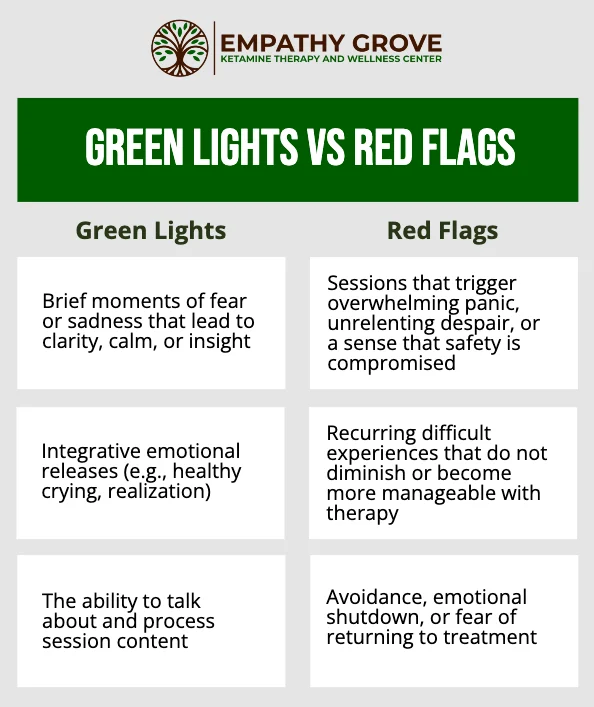
If you experience repeated, unmanageable panic or distress, we may pause your ketamine therapy treatment, adjust it, slow it down, or even discontinue it to prioritize safety.
Collaborative, Patient-Centered Decision-Making
A cornerstone of modern ketamine therapy is the principle of shared decision-making. Empathy Grove patients are never asked to “push through” overwhelming experiences alone. Instead, care teams work collaboratively to adjust:
- Dosage: Lowering the amount may yield a more manageable experience.
- Mode of administration: For example, Spravato (nasal esketamine) offers a slower onset, while intramuscular injections may allow flexible tailoring.
- Session frequency: Adjusting how often sessions occur.
- Support structure: Increasing therapeutic support before, during, or after sessions.
Patient empowerment and informed choice are central to lasting, positive outcomes, and that’s why they are integral to our ketamine therapy practice at Empathy Grove in Portland.
Alternatives and Adjuncts Within the Ketamine Toolkit
To accommodate the best ketamine therapy journey for each individual patient, we offer three methods of administration and ketamine therapy journeys:
- Intramuscular or IM Ketamine: Single injection for immersive experiences, for those seeking deeper results
- Sublingual Ketamine Lozenge (3 hours) – Inner Journey: Dissolvable under tongue; mild, gradual effect, for newcomers and those seeking gentle immersion
- Sublingual Ketamine Lozenge (90 minutes) – Relational Journey: Dissolvable under tongue; mild, gradual effect, for newcomers and those seeking gentle immersion
The Healing Path: Difficult Emotions Are Not Detours
As the landscape of mental healthcare evolves, so does our understanding that real, lasting transformation is sometimes uncomfortable, but never without hope. It’s natural to hope that healing will be a linear journey of increasing comfort. The reality, especially with transformative treatments like ketamine therapy at Empathy Grove in Portland, is much more nuanced. Difficult feelings aren’t evidence that therapy is failing; more often, they are markers that you are encountering the very terrain that needs healing.
With curiosity, skilled clinical support, and post-session integration, even the hardest emotions can be transformed into stepping stones on the path toward wholeness and well-being.
If you or someone you love is exploring ketamine therapy and wants to understand how it might fit into your healing process, contact us at Empathy Grove Ketamine Therapy and Wellness Center in Portland, Oregon for a free consultation.
FAQs
1) Why do difficult emotions often surface during ketamine therapy?
Difficult emotions such as fear, self-judgment, and unresolved grief can surface during ketamine therapy because the medication reduces mental barriers and defenses. This allows individuals to explore deeper emotional experiences, confront underlying issues, and gain insight in a safe, therapeutic setting.
2) Is experiencing fear or ego dissolution normal in ketamine sessions?
Yes, it is common to experience a sense of fear or ego dissolution during ketamine therapy. This feeling is part of the therapeutic process and can provide valuable insights into one’s sense of self and attachment. Our supportive integration helps people make meaning of these experiences.
3) How can I use the “healing window” after my ketamine session?
The period after a ketamine session, often called the “healing window,” is a time of heightened neuroplasticity and openness. This is where our expert ketamine therapy practitioners at Empathy Grove in Portland engage in therapeutic integration, practice self-reflection, and take small actions based on insights gained during your session to enhance long-term healing.
4) What should I do if I encounter overwhelming or distressing feelings during therapy?
It’s important to approach these emotions with curiosity rather than certainty. We will guide you with these emotions, and help you process them safely. Knowing the difference between “red flags” (overwhelming distress) and “green lights” (productive insight) is key to our administration of ketamine therapy treatment.
5) Are there alternative approaches if ketamine therapy feels too challenging?
Yes, this is why we offer three ketamine administration methods at Empathy Grove. And our collaborative, patient-centered decision-making ensures that your treatment is tailored to your needs.
Disclaimer: The content above is for educational purposes only and not a substitute for professional medical advice. Consult a qualified healthcare provider to determine if ketamine therapy is appropriate for you.