Ketamine therapy has moved from the margins of medicine into more mainstream conversations about depression, PTSD, chronic anxiety, and pain, yet many people still struggle to understand what the experience is actually like over months or years. Clinical studies can tell us about averages, response rates, and symptom scales, but they don’t always capture the day-to-day reality: how people decide to start, what changes they notice first, what plateaus feel like, and what it takes to maintain progress when life remains complicated.
This collection shares real-world, long-term ketamine therapy stories from Empathy Grove, Portland-area residents. These accounts focus on lived outcomes, both the improvements people report and the challenges they encounter, told in the practical language of people managing work, relationships, finances, and health.
Rather than presenting ketamine as a miracle cure or a cautionary tale, the goal is to reflect the nuance that shows up when treatment extends beyond a single course and becomes part of an ongoing care plan.
These narratives are not meant to replace medical advice or predict anyone’s results. They are intended as a grounded companion to clinical information: a way to better understand what “getting better” can look like in practice, how it can unfold unevenly, and how people think about sustainability, side effects, and support systems over time.
1) “Lynn,” Beaverton — Major Depression, and the First Real Sense of “Being Seen”
- Theme:
Depression relief + therapeutic alliance - Timeline:
Initial series → improved functioning → continued follow-up
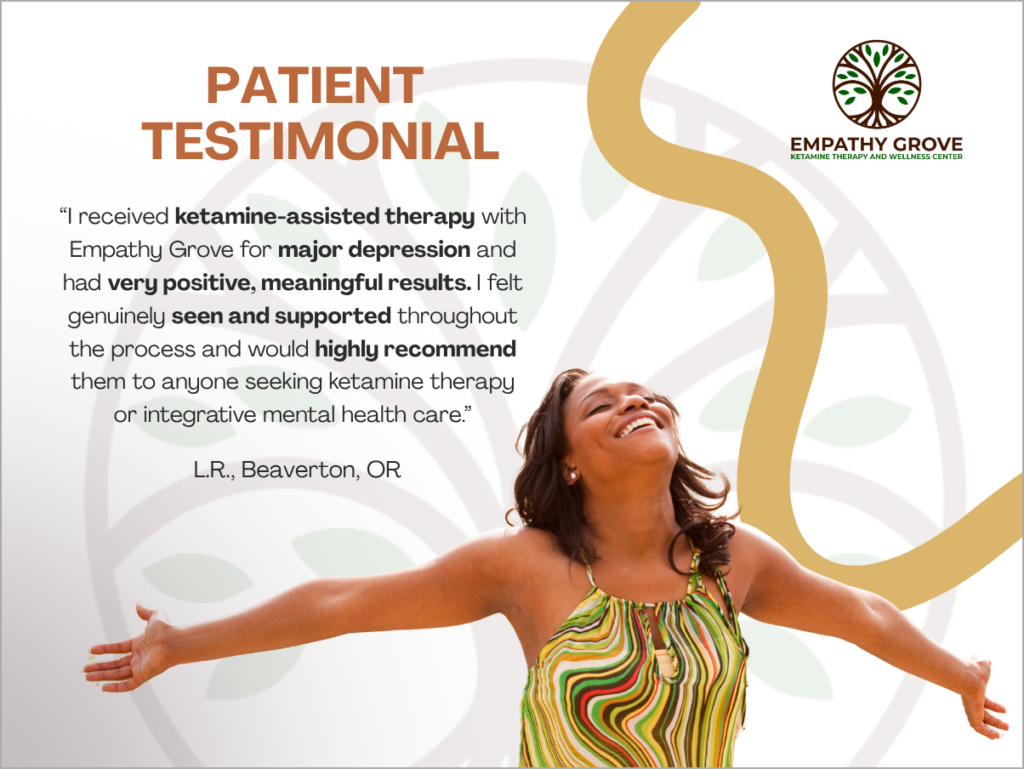
Lynn described classic major depression patterns: low motivation, emotional numbness, and a feeling that life was happening behind glass. What stood out in her story wasn’t only symptom change, it was the experience of being treated like a whole person, not a checklist.
During her ketamine therapy sessions, she began to notice small functional wins: mornings became slightly easier, and decision-making didn’t feel as impossible. Over the next several weeks, she reported meaningful results, not constant euphoria, but less heaviness, more access to emotion, and more capacity to connect with others.
Long-term outcome (weeks to months):
Lynn’s progress looked like a gradual reclaiming of routines and relationships. She also found that having structured preparation and integration support helped her maintain gains and understand what to do when symptoms flared (sleep, movement, therapy homework, asking for help sooner).
For many people, the “real” outcome is improved capacity, to participate in life, to engage in therapy, to respond instead of shut down.
2) “Maya,” Portland — Trauma Work That Finally Started Moving
Theme:
Safety + trauma processing + “life-changing” shift
Timeline:
Early sessions → noticeable emotional movement → longer-term integration
Maya came in feeling stuck: she’d done “the work” in talk therapy, but traumatic memories still felt locked in her nervous system. She described carrying a persistent sense of danger and bracing—like her body never got the memo that the threat was over.
After her early ketamine therapy journeys, what changed first wasn’t a constant “happy” mood. It was a felt sense of safety, enough to stay present with emotions that previously overwhelmed her. Over the following weeks, she noticed a surprising outcome: trauma processing began to feel less like re-living and more like re-organizing. She described the experience as life-changing, especially because she felt supported in a setting designed to be calm, private, and secure.
Long-term outcome (weeks to months):
With ongoing integration, Maya reported a clearer ability to make meaning of what surfaced during sessions and translate it into day-to-day behavior changes, especially around boundaries, triggers, and self-trust. Her biggest marker of progress wasn’t perfection; it was that setbacks felt workable rather than catastrophic.
This is the kind of “Portland ketamine success story” people rarely see online: not a miracle cure, but a trajectory, safety first, then change.
3) “Kara,” Sherwood — Anxiety Quieted, and There Was Finally Space Between Thoughts
Theme:
Anxiety relief + self-compassion + sleep improvement
Timeline:
Early journeys → calmer nervous system → better sleep → more resilience
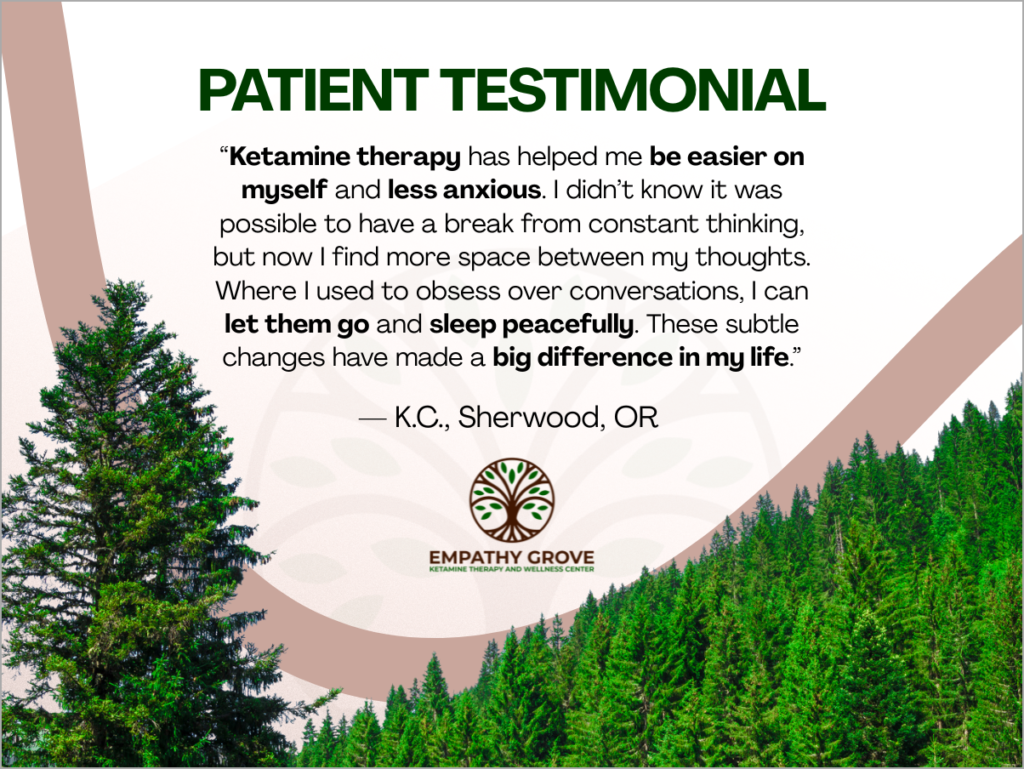
Kara came in describing an always-on mind: racing thoughts, self-criticism, and a constant scanning for what might go wrong. Sleep wasn’t restorative, she’d lie down tired and wake up still braced.
After her ketamine journeys, she described a subtle but powerful change: there was more space between thoughts. That space made it easier to interrupt spirals before they became full panic. She also noticed she was easier on herself, less harsh, less reactive. One of her most meaningful long-term outcomes was more peaceful sleep, which reinforced everything else: better mood stability, less irritability, more patience.
Long-term outcome (weeks to months):
Kara’s experience highlights a common pathway: anxiety reduction isn’t only “less fear,” it can be more recovery (sleep), which then compounds improvements over time.
People often want to know what “counts” as progress. Kara’s story shows progress can be physiological (sleep), cognitive (space between thoughts), and emotional (self-compassion), not just “anxiety score went down.”
4) “Jordan,” Lake Oswego — A Breakthrough Over Months, Not Days
Theme:
Longer arc of change + “knots” releasing
Timeline:
Initial sessions → continued growth → major breakthrough within ~6 months
Jordan wasn’t looking for a one-week transformation. He described feeling like something inside was tangled, old patterns, emotional tension, and a sense of carrying weight he couldn’t explain. Ketamine therapy didn’t instantly erase his challenges, but it opened a door: he began noticing moments of relief and clarity that felt unfamiliar, like his system was learning a new baseline.
Over time (within about six months), Jordan described a more significant breakthrough, like longstanding internal “knots” were finally loosening. The language he used was more body-based than intellectual: not “I logically understand,” but “I can feel the shift.”
Long-term outcome (weeks to months):
Jordan’s trajectory speaks to an important reality in ketamine success stories Portland residents share: some people get quick symptom relief, while others experience changes as a slow reorganizing, especially when the work includes consistent integration and nervous-system support.
Patterns Across These Empathy Grove Ketamine Therapy Journeys
Based on these testimonials, several recurring themes emerge in real-world ketamine therapy outcomes in Portland:
- Time to effect varies, early shifts are often “capacity,” not perfection.
People frequently describe changes like: easier mornings, less reactivity, more emotional access, more calm in the body, or improved sleep. These can show up early and then deepen over weeks.
- Safety and support appear to be force multipliers.
Multiple stories emphasize feeling safe, supported, and “seen.” That matters because ketamine sessions can surface intense material; outcomes tend to be stronger when people have a steady therapeutic container.
- Trauma work often improves when the nervous system can downshift.
Rather than brute-force processing, people describe trauma becoming more workable—less overwhelming, more integrated.
- Long-term outcomes often include maintenance planning.
Not everyone experiences permanent remission after an initial series. Some people benefit from a booster session or ongoing integration practices to sustain gains.
- Relapse risk exists, but “relapse” may look like fluctuation, not total reset.
A common pattern is improvement with occasional dips. The difference is that people may recover faster and recognize early warning signs sooner, especially with clinician support.
What Readers Should Consider When Evaluating Outcomes
If you’re comparing ketamine therapy stories, here’s what to look for beyond the headline:
- What was the main target? Depression, anxiety, trauma, chronic stress, or complex medical stress often have different “success” markers.
- What changed first? Mood, sleep, motivation, emotional regulation, self-compassion, pain/tension, relationships—early wins can be quiet.
- Was there integration support? Outcomes tend to be more durable when insights translate into action (behavior change, boundaries, nervous-system care).
- What does “life-changing” mean, functionally? More consistency at work? Less avoidance? Better sleep? Fewer panic spirals?
- Is maintenance discussed realistically? Sustainable progress often includes a plan for boosters, therapy cadence, and lifestyle supports.
How to Track Your Progress With Clinician Support
A helpful way to approach ketamine therapy is to track outcomes like you would any evidence-based treatment, without reducing your experience to a single number.
Consider tracking:
- Weekly mood + anxiety snapshots (simple 0–10 ratings, plus 1–2 sentences of context)
- Sleep quality (time to fall asleep, awakenings, rested feeling)
- Functional markers (work attendance, household tasks, social contact, exercise, appetite)
- Trigger reactivity + recovery time (“How long did it take me to come back to baseline?”)
- Self-talk and self-compassion (frequency/intensity of harsh inner critic)
- Integration takeaways (one insight, one action step after each session)
Then review these with your clinician to identify:
- what’s improving steadily
- what’s improving but fragile (needs support)
- what isn’t changing yet (may need adjustment—dose, pacing, integration, co-therapies)
Explore Whether Ketamine Therapy Is a Fit at Empathy Grove
If you’re looking for ketamine therapy outcomes in Portland that reflect real life, progress measured over weeks to months, supported by preparation and integration, Empathy Grove offers a care model centered on safety, support, and long-term growth.
Ready to talk it through? Schedule a consultation with Empathy Grove to discuss your goals, your history, and what a realistic treatment plan could look like for you.
FAQs (Ketamine Therapy Outcomes + Long-Term Support)
1) What kinds of “real-world outcomes” should I look for beyond mood scores?
Look for practical shifts over weeks to months, sleep quality, work consistency/attendance, ability to complete household tasks, social contact, exercise, appetite, and how quickly you recover after getting triggered.
2) How can I track progress without reducing everything to a single number?
Use a simple weekly check-in that combines: (a) 0–10 mood/anxiety snapshots plus 1–2 sentences of context, (b) sleep notes (time to fall asleep, awakenings, rested feeling), and (c) functional markers (work, home, social, movement, appetite).
3) What should I bring to my clinician to make appointments more useful?
Bring a short log that highlights: what’s improving steadily, what’s improving but still fragile (needs support), and what isn’t changing yet, plus 1–2 “integration takeaways” after each session (one insight and one action step).
4) How do I know whether improvements are “life-changing” in a functional sense?
Translate “life-changing” into concrete behaviors: fewer panic spirals, less avoidance, better sleep, more consistent work performance, and faster return to baseline after stress—rather than expecting constant happiness.
5) Is maintenance and long-term planning normal with ketamine therapy?
Often, yes. Sustainable progress may include a realistic plan for boosters, therapy cadence, and lifestyle supports, so maintenance is discussed as part of long-term care rather than a “failure.”
—
Disclaimer: The content above is for educational purposes only and not a substitute for professional medical advice. Consult a qualified healthcare provider to determine if ketamine therapy is appropriate for you.