People usually arrive at ketamine with a simple question: Does it work? It’s a fair question, especially after years of trying treatments that promised relief but delivered only partial change. The problem is that “success” in ketamine therapy doesn’t land in a single number or headline.
For some, success means fewer depressive symptoms. For others, it looks like sleeping through the night, feeling less stuck or being able to imagine a future again. Understanding ketamine treatment outcome measures helps clarify what research shows, what clinics track and how individual experiences fit into that broader picture. Read this article to learn how outcomes are evaluated, what studies suggest and how patient experiences at Empathy Grove reflect both measurable change and lived meaning.
Ketamine Treatment Outcome Measures: How Progress Is Commonly Evaluated
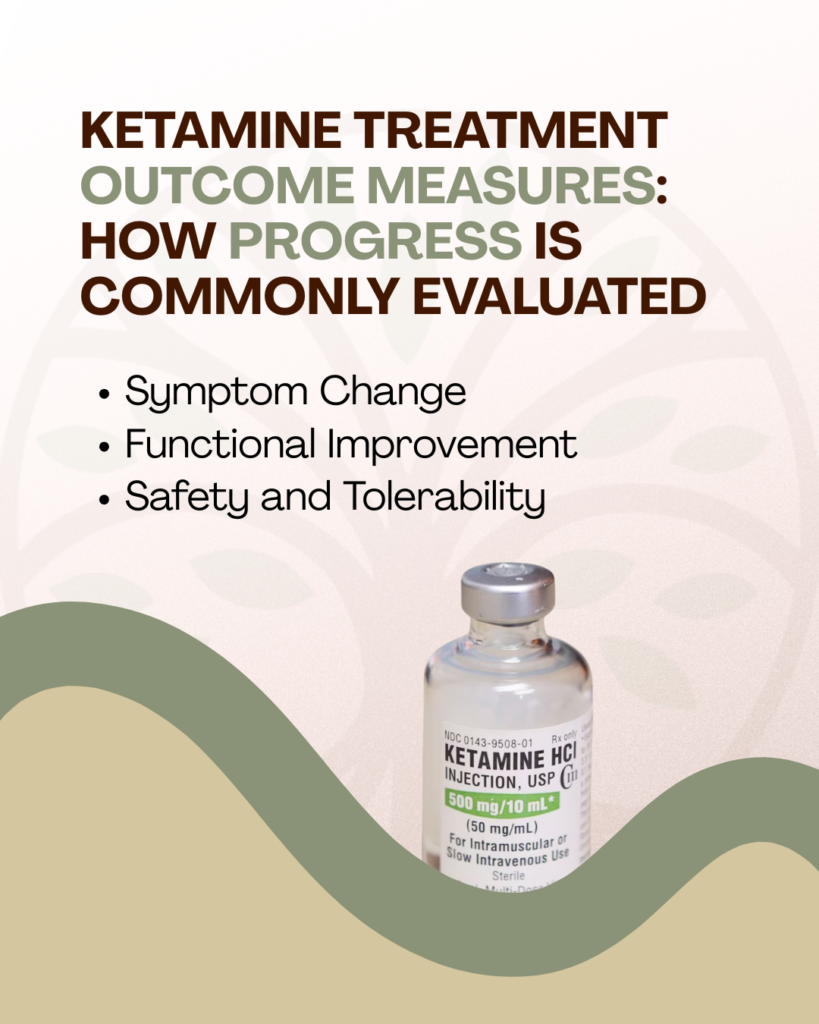
In clinical practice, ketamine treatment outcome measures are used to track patterns over time, not to judge a single session. These measures often fall into three broad categories:
- Symptom change: shifts in depression or anxiety severity using validated scales
- Functional improvement: daily engagement, sleep quality, motivation or ability to participate in therapy
- Safety and tolerability: how well a person handles treatment across sessions
Clinics rarely rely on one data point. Instead, they look for trends, such as how someone is performing across weeks rather than hours. Outcome measures are tools, not verdicts. They help clinicians adjust pacing, integration support or treatment plans as needed. Used thoughtfully, they create a shared language between the provider and the patient to understand progress.
Ketamine Therapy Effectiveness Statistics: What Research Tells Us
When people look up ketamine, they often encounter ketamine therapy effectiveness statistics tied to treatment-resistant depression (TRD). Research over the past two decades has shown that ketamine can produce rapid antidepressant effects in some individuals who have not responded to conventional treatments, particularly in short- to medium-term follow-up windows.
At the same time, the limits are clear in the literature. Not everyone responds. Effects can diminish over time. Maintenance, integration and ongoing support influence durability. These findings don’t position ketamine as a cure. They frame it as a tool that may create meaningful change for some people when used within a thoughtful care model.
Ketamine Success Rate TRD Clinic Discussions: Why “Rate” Is a Tricky Word
It’s common to search for a ketamine success rate TRD clinic, but the word “rate” can oversimplify a complex process. Ketamine clinics vary widely in how they define success, who they treat and how outcomes are tracked.
Some define success as symptom reduction. Others include functional recovery or quality-of-life gains. Patient histories, dosing approaches and integration support also differ. Because of this, comparing “rates” across clinics can be misleading.
A more useful lens asks:
- What changed over time?
- How stable were those changes?
- Did the person regain a sense of agency or engagement?
These questions often reveal more than a single percentage ever could.
Beyond Scores: What Patients Often Mean When They Say Ketamine Helped
Clinical scales are useful, but they rarely capture how people describe change in their own words. When patients talk about ketamine helping, they often point to shifts in how they relate to themselves and to care.
Across our Google reviews, common themes include feeling emotionally safe during sessions, supported through multiple treatments and able to engage more deeply in ongoing therapy. Rather than focusing on dramatic single-session effects, reviewers often describe gradual changes: less emotional rigidity, more self-trust and a stronger sense of direction.
A Patient Perspective on Outcome After a Full Course of Care
The following testimonial comes from Empathy Grove’s website and reflects one individual’s experience after a series of six ketamine-assisted sessions. It represents a personal outcome over time, not a guaranteed or typical result.
“I feel like this reintegrated entity that is me—whole in a way I’ve never felt before. I’ve discovered where I want to go and I know I have choices. I’m no longer just surviving to die—I’m surviving to live. Now I can say with confidence: I’m excited for tomorrow, for next week, for next year…”
— A.P., after a series of 6 ketamine-assisted sessions

This reflection highlights themes that also appear in broader patient feedback: a shift toward agency, a renewed future orientation and a gradual return of meaning rather than an all-at-once shift. It does not establish effectiveness for everyone. It shows one way success may be experienced when care unfolds with continuity and integration.
How Empathy Grove’s Care Model Supports Measurable and Meaningful Outcomes
At Empathy Grove, our care model emphasizes elements that patients consistently reference in positive reviews: screening and readiness, clinician continuity, paced treatment and integration support before and after ketamine sessions.
Rather than focusing on single-session impact, the approach supports cumulative change across time. Seeing the same provider and having space to process experiences appears to matter to many patients, especially those working through complex emotional histories. In this context, outcome measures and patient experience are treated as complementary—not competing—sources of information.
A Note on Chronic Pain Outcomes and Scope of Care
Ketamine has also been studied for certain chronic pain conditions and ketamine infusion results chronic pain are discussed in broader medical literature. However, our primary focus is mental and emotional health.
Pain-related outcomes are referenced here for context, not as a core service offering. This distinction matters when evaluating whether a clinic’s scope aligns with your goals.
What This Means for Someone Considering Ketamine Therapy
If you’re considering ketamine, outcome data can guide questions rather than decisions. Look for clinics that explain how they track progress, adjust care over time and define success beyond symptom scores.
It can also help to reflect on what outcomes matter most to you. For some, reduced depressive severity is the priority. For others, improved functioning or emotional flexibility matters more. Clarifying this early can make consultations more productive.
FAQs
- How does Empathy Grove track ketamine treatment outcomes?
At Empathy Grove, we evaluate outcomes over time using changes in symptoms, functional improvements and patient feedback, rather than relying on single-session results.
- What does “success” mean in ketamine therapy at Empathy Grove?
Success is defined individually and may include symptom relief, improved daily functioning or increased emotional engagement, depending on the person’s goals.
- How many sessions are typically considered when evaluating outcomes?
Outcomes are often reviewed across a series of sessions, since meaningful change may emerge gradually rather than after one treatment.
- Does Empathy Grove offer integration support after ketamine sessions?
Yes. Empathy Grove includes preparation and integration support to help patients process experiences and apply insights to daily life.
- How should patients interpret their progress during treatment?
Progress is viewed as a pattern over time and patients are encouraged to discuss changes, concerns and goals openly with their provider throughout care.
How to Evaluate Outcomes Without Chasing Guarantees
Outcome measures guide decisions. Research provides context and reviews add perspective, but neither offers guarantees. When evaluating ketamine care, focus on how progress is tracked, how support is provided over time and how expectations are set.
At Empathy Grove, we emphasize measurement, continuity and integration rather than promises. Reviewing clinic FAQs, asking how outcomes are evaluated and clarifying your own goals can support a more informed and steady choice.