People don’t ask about ketamine because they’re opposed to healing. They ask because they want to feel safe. Ketamine can shift perception, and the thought of feeling out of control even briefly can be unsettling, especially if depression or anxiety already makes life feel unpredictable.
A strong ketamine therapy safety record comes from process, not bravado: careful screening, appropriate dosing, medical oversight, and a clear plan for before, during, and after each session. This article breaks down what “safe” means in supervised ketamine-assisted therapy and how our protocols reduce risk in a controlled clinical setting.

Ketamine Therapy Safety Record: What “Safe” Actually Means
“Safe” in clinical ketamine work usually means four things:
- Right candidate (screened medically and psychologically)
- Right dosing plan (tailored, not one-size-fits-all)
- Right monitoring (someone is watching what matters)
- Right discharge plan (no driving, stable before leaving)
Ketamine can cause predictable short-term effects, such as dissociation, dizziness, nausea, and temporary increases in blood pressure. A solid ketamine therapy safety record is built around anticipating those effects rather than being surprised by them.
Ketamine Therapy Safety Record Starts With Screening
At Empathy Grove, our patient candidates are medically and psychologically screened to ensure safety, and they must be open to the therapeutic process and integration work. That matters because screening prevents avoidable complications before they happen.
In many supervised programs, screening often includes:
- Medical history
- Current medications and substances
- Mental health history
- Treatment goals and support system
This is also where expectations get set. Screening is a major pillar of a ketamine therapy safety record because it lowers risk before the first dose is ever given.
Ketamine Clinic Safety Standards: Who’s in the Room and Why
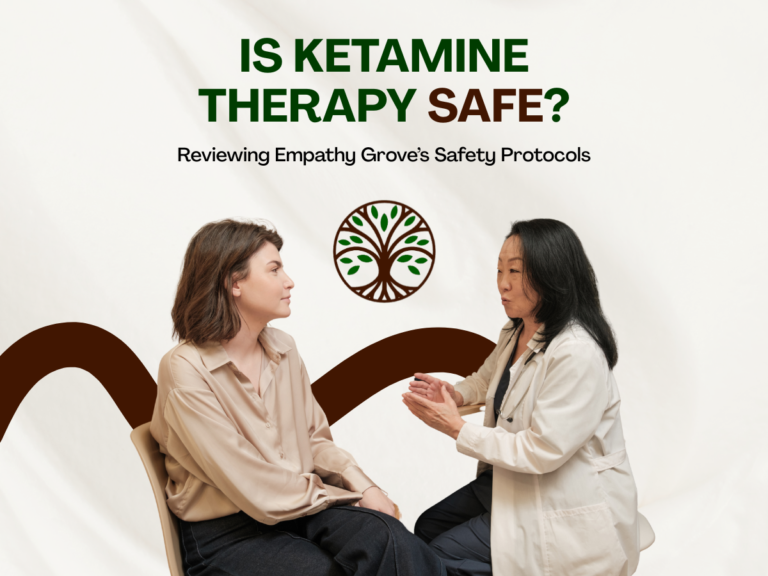
Ketamine clinic safety standards are simple and practical: trained supervision, clear roles, and a plan if anything feels off. At Empathy Grove, we emphasize the importance of a guided experience working with a trained provider during your therapy treatment; meaning someone is present to monitor your comfort, respond to side effects, and support you if anxiety or confusion arises.
In a reputable clinic, ketamine is never treated like a self-guided experiment. Oversight is the point, and it’s a major reason supervised care is safer than unsupervised use.
Medical Monitoring Ketamine Therapy: What Gets Checked Before, During, and After
During supervised ketamine care, clinics commonly track:
- Blood pressure
- Heart rate/pulse
- Breathing and oxygen saturation
- Level of alertness and mental status (how oriented and stable you seem)
Empathy Grove encourages a trained provider to monitor you throughout certain administration methods to support safety and comfort. The typical rhythm is simple:
- Baseline checks before ketamine is given
- Monitoring during the experience
- Observation afterward until you’re steady enough to leave safely
This structure matters because ketamine can temporarily raise blood pressure and change perception. The goal of medical monitoring ketamine therapy is to identify issues early and ensure you return close to baseline before discharge.
Risks of Supervised Ketamine Administration: What Clinics Watch For
Let’s name the risks of supervised ketamine administration (and supervised ketamine sessions more broadly) in plain language.
At Empathy Grove, we consider potential risks and side effects, such as:
- Dizziness or nausea
- Temporary increase in blood pressure
- Dissociation or confusion during treatment
- Emotional sensitivity as difficult feelings surface
- Potential for misuse if ketamine isn’t used in a controlled setting
Most of these effects are short-lived, yet important to mention. The point of supervision is to reduce it through screening, dosing choices, and monitoring.
Also worth noting is that we work with intramuscular (IM) injection, and sublingual lozenges for maintenance, rather than IV infusion. The same safety logic applies across routes: predictable effects, planned safeguards.
Ketamine Treatment Side Effects Management: What Happens If You Feel Unwell
In supervised settings, responses often look like this:
- If nausea hits, staff may adjust positioning, slow the pace, and help you ride it out safely. We also have antinausea medication available as needed.
- If anxiety spikes, providers use grounding cues and reassurance, and may adjust timing or dosing in future sessions.
- If blood pressure rises, the team pauses, rechecks vitals, and follows a protocol based on your risk profile.
We monitor you for safety and comfort and screen for risk factors beforehand. That combination is what makes side-effect management effective. It’s also why supervised ketamine care is different from unsupervised use.
Discharge and Aftercare: The Safety Steps People Forget
One of the clearest safety rules is also the easiest to underestimate: no driving after ketamine.
At Empathy Grove we encourage you to arrange for a trusted friend or family member to drive you home due to ketamine’s dissociative effects. This is a core part of responsible discharge.
A simple aftercare checklist helps, too:
- Keep the rest of the day light (no big decisions)
- Hydrate and eat something gentle when you’re ready
- Avoid alcohol or other intoxicants
- Plan a quiet evening and sleep support
Red Flags and When Ketamine Isn’t the Right Next Step
Screening is done to ensure safety and to discuss risks based on your medical history. In many programs, extra evaluation may be needed when there’s uncontrolled high blood pressure, certain heart conditions, severe sleep apnea, specific psychiatric histories (like mania/psychosis risk), or substance misuse concerns.
The safest move is simple: share your full history during screening and let a qualified provider guide the decision.
How to Vet Any Ketamine Provider

Safer ketamine care follows clear standards: medical and psychological screening, supervised sessions with monitoring, and a strict no-driving discharge plan. Our FAQ highlights these essentials: screening for safety and readiness, provider monitoring during treatment, and arranging a trusted ride home afterward.
If you’re considering ketamine, choose a clinic that explains risks clearly and supports preparation plus integration. If Empathy Grove feels like the right fit, contact us.
FAQs
1) What is the ketamine therapy safety record in supervised care?
Ketamine has a long history of medical use, and safety depends heavily on screening, dosing, and monitoring in a controlled setting.
2) Will my vital signs be monitored?
Empathy Grove notes provider monitoring during sessions; clinics commonly track blood pressure and other vitals.
3) What does screening involve at Empathy Grove?
Medical and psychological screening, plus readiness for therapy and integration work.
4) What if I get anxious during the session?
Providers support grounding and comfort; screening and preparation reduce the odds of overwhelm.
5) Can I drive myself home?
No—Empathy Grove requires a trusted ride home.
Disclaimer: The content above is for educational purposes only and not a substitute for professional medical advice. Consult a qualified healthcare provider to determine if ketamine therapy is appropriate for you.